
Bass Booster App Download Free for Android & iOS
Today
20MB
V3.3.5
Android 5+
694
Description
Bass Booster App: How to Get Deeper Bass on Android and iPhone
Have you ever played your favorite song on your smartphone and felt that something was missing from the sound? The vocals might be clear, but the bass feels weak, the beats lack depth, and the overall listening experience seems less exciting than it should.
A Bass Booster App can help improve this experience by adjusting low-frequency audio and giving users more control over how their music sounds. Instead of relying entirely on default audio settings, these applications provide tools such as bass enhancement, equalizer controls, sound presets, and audio customization. Whether you listen to hip-hop, electronic music, pop, rock, or podcasts, the right audio settings can make a noticeable difference. However, not every application works equally well with every smartphone, music player, or pair of headphones.
This guide explains how bass enhancement works, which features matter, how to choose a suitable application, and how to adjust audio without creating unnecessary distortion. It also covers Android and iPhone compatibility, installation considerations, and practical listening advice for 2026.
What Is a Bass Booster App?
A Bass Booster App is an audio enhancement application that helps users adjust and strengthen the low-frequency portion of music and other audio content. It typically uses digital audio processing to modify how bass frequencies are reproduced through compatible headphones, earbuds, speakers, or other output devices. Bass refers to the lower range of audible sound frequencies. It gives music its depth, weight, and rhythmic foundation. You can notice it in the deep beats of electronic music, the kick drum in rock songs, and the low notes produced by bass guitars.
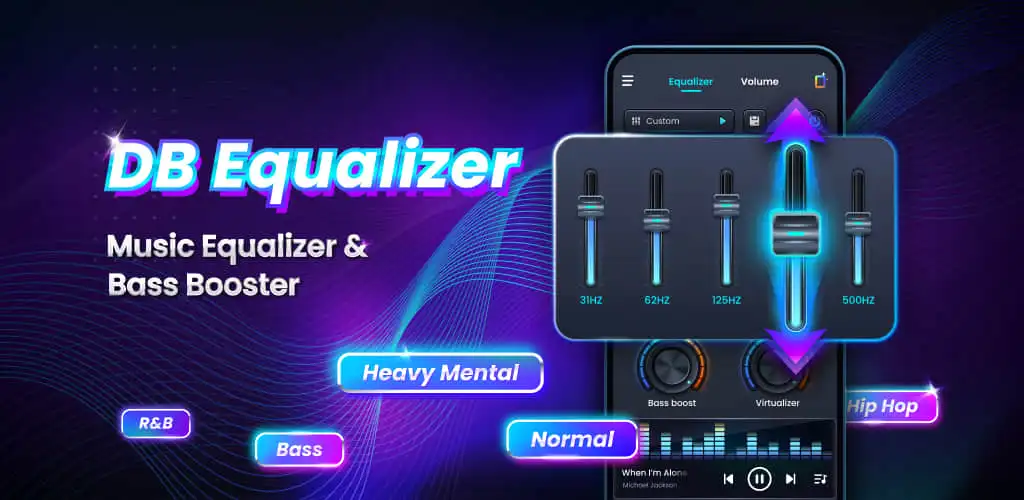
Many smartphones already include basic audio controls, but their customization options can be limited. A dedicated bass enhancement application can provide additional adjustment tools, allowing listeners to create sound profiles that better match their preferences.
For example, users might want:
- Stronger low-frequency sound for electronic music.
- More balanced bass for everyday music listening.
- Customized equalizer settings for headphones.
- Different audio presets for different music genres.
- Greater control over the relationship between bass, vocals, and treble.
It is important to understand that a bass booster APK cannot physically upgrade a smartphone speaker or turn ordinary earbuds into professional studio headphones. Its purpose is to modify the audio signal within the limits of the hardware.
How Does a Bass Booster App Work?
A bass enhancement application works by processing an audio signal and adjusting selected frequency ranges before the sound reaches the output device. Most applications use digital signal processing (DSP), which allows software to modify audio characteristics without changing the original music file.
Understanding Low-Frequency Audio
Human hearing generally covers frequencies from approximately 20 Hz to 20,000 Hz, although actual hearing ability varies between individuals.
For practical audio customization, frequencies are often divided into three broad groups:
| Frequency range | Audio characteristics | Typical sound elements |
| 20–250 Hz | Low frequencies | Sub-bass, bass guitar, kick drums |
| 250 Hz–4 kHz | Midrange | Vocals, guitars, instruments |
| 4–20 kHz | High frequencies | Cymbals, details, brightness |
These ranges are broad audio categories rather than strict boundaries. A bass booster primarily works with the lower portion of this spectrum. Increasing selected low-frequency bands can make music sound fuller and give rhythmic elements more presence.
The Role of Digital Equalization
An equalizer allows users to increase or decrease specific frequency ranges. For example, a five-band equalizer might provide separate controls for bass, lower mids, middle frequencies, upper mids, and treble.
When a user raises the lower-frequency bands, the application attempts to make those sounds more prominent in the final output. However, excessive adjustment can reduce available audio headroom and produce clipping or distortion. Good bass enhancement is about finding balance rather than moving every slider to its maximum position.
Main Popular Features to Look For in a Bass Booster App
Not every audio enhancement application offers the same tools. Before choosing one, understand which features actually improve the listening experience.
1. Bass Boost Control
This is the central feature of a bass enhancement application. A bass control lets users adjust the strength of low-frequency sound according to their preferences. Some applications provide a simple slider, while others offer more detailed frequency adjustments. A gradual adjustment is generally preferable to maximum boosting.
2. Built-in Audio Equalizer
An audio equalizer provides more control over the entire frequency spectrum. Instead of increasing only bass, users can balance low, middle, and high frequencies to create a more natural sound. This is particularly useful when listening to different genres or switching between headphones and speakers.
3. Custom Sound Presets
Presets make audio customization easier for people who do not want to adjust every frequency manually.
Common examples include:
- Bass Boost
- Rock
- Pop
- Classical
- Jazz
- Electronic
- Acoustic
- Vocal
Preset names and available options vary between applications. Their actual sound also depends on the device and audio output.
4. Virtualizer and Surround Effects
Some applications include virtualizer or spatial audio effects. These features attempt to create a wider or more spacious listening experience through audio processing. They do not physically increase the number of speakers or guarantee genuine surround sound.
5. Volume Control
Certain bass booster applications also include volume controls. This can be convenient, but volume amplification and bass enhancement are different functions. Increasing overall volume does not automatically improve bass quality.
6. Simple and Responsive Interface
An easy-to-use interface matters because audio settings should be straightforward to adjust.
Look for applications that provide:
- Clearly labeled controls.
- Responsive adjustment sliders.
- Easy preset selection.
- A visible enable and disable option.
- Minimal unnecessary menus.
- Clear permission explanations.
7. Device Compatibility
Compatibility is one of the most important considerations. An application may work with one music player but fail to affect another. Some effects are limited by the smartphone’s audio system, operating system version, or active audio session. Check compatibility information before installing an application.
Benefits of Using a Bass Booster
A suitable application can provide several useful audio customization options.
More Control Over Music Quality
Different people prefer different sound profiles. Some enjoy strong bass, while others prefer a balanced presentation with clear vocals. A bass booster gives users more flexibility than basic volume controls.
Personalized Listening Experience
You can create different settings for different headphones, speakers, or music genres. For instance, an electronic music listener might prefer more low-frequency emphasis, while someone listening to acoustic recordings might prefer a more neutral profile.
Improved Audio Balance
A good equalizer does more than increase bass. It helps users adjust the relationship between low, middle, and high frequencies. This can make music sound more balanced when the original playback setup does not match personal preferences.
Convenient Audio Customization
Many applications provide presets and sliders in one interface. Users can experiment with different settings without editing their music files.
Better Control Across Compatible Media
Some applications support multiple types of media playback, including music and video. However, this depends on the application’s implementation and the smartphone’s audio framework.
Bass Booster App for Android and iPhone
Android and iOS offer different approaches to audio customization. Understanding these differences can help you choose the right solution.
Bass Booster for Android
Android users can find dedicated bass enhancement and equalizer applications through Google Play. Android’s audio framework includes audio effects such as BassBoost, Equalizer, Virtualizer, and DynamicsProcessing. However, the availability and behavior of these effects can depend on the device and the application’s audio implementation.
Common Android features include:
- Dedicated bass adjustment.
- Multi-band equalizers.
- Custom sound profiles.
- Music playback controls.
- Compatible headphone enhancements.
- Some background audio processing options.
Before installing an application, check its Android version requirements, developer information, update history, user reviews, and data safety information.
Bass Booster for iPhone
iPhone users also have options for adjusting audio, although dedicated third-party applications may have different system access and limitations compared with Android applications. Apple provides built-in audio customization features through its operating system and supported applications.
For example, users can explore:
- Open iPhone Settings.
- Navigate to Apps and then Music.
- Select EQ.
- Choose an available equalizer preset.
Additional audio accessibility controls are available under Settings > Accessibility > Audio & Visual. Certain frequency adjustments depend on supported headphones and features. A third-party bass enhancement application should not be assumed to modify every audio source across the entire iPhone.
Bass Booster App vs Equalizer vs Volume Booster
These three audio tools are related, but they do not perform exactly the same function.
| Feature | Bass Booster | Equalizer | Volume Booster |
| Main purpose | Enhance low frequencies | Adjust different frequencies | Increase audio output level |
| Bass control | Main function | Available through low-frequency bands | Not its primary purpose |
| Treble adjustment | Sometimes | Yes | Usually no |
| Vocal adjustment | Limited | Yes | No |
| Sound customization | Bass-focused | Broad customization | Limited |
| Best suited for | Stronger bass presence | Balanced audio profiles | Volume adjustment |
Which One Should You Choose?
- Choose a bass booster if you mainly want more prominent low-frequency sound.
- Choose an equalizer if you want complete control over different audio frequencies.
- Choose a volume booster if you need additional output level, while remembering that excessive amplification can cause clipping, distortion, or uncomfortable listening levels.
- For many listeners, an application that combines bass enhancement and equalizer controls provides the most flexible solution.
How to Download and Install a Bass Booster App?
Installing an audio enhancement application is generally straightforward, but selecting a trustworthy source is important.
Steps for Android Users
- Open the Google Play Store.
- Search for Bass Booster App or Bass Booster Equalizer.
- Review the available applications.
- Check the developer’s name and application details.
- Read recent user feedback.
- Review the Data Safety section and requested permissions.
- Select Install.
- Open the application and follow its setup instructions.
- Play compatible music and adjust the bass settings gradually.
Avoid downloading modified APK files from unknown websites. Unofficial packages can contain unwanted software, intrusive advertisements, or malicious code.
Steps for iPhone Users
- Open the Apple App Store.
- Search for bass booster or music equalizer.
- Review application descriptions and compatibility.
- Check ratings, privacy information, and subscription terms.
- Install a suitable application.
- Follow its setup instructions.
- Explore its supported audio controls.
Some applications offer free features alongside paid subscriptions. Check the pricing information before starting a trial or purchasing premium access.
How to Adjust Bass Settings for Better Sound?
Installing an application is only the first step. The real difference comes from using its controls properly. Here is a practical approach to getting a balanced listening experience.
1: Start With Default Settings
Play a familiar song and listen to its original sound before making adjustments. This gives you a reference point for comparing the changes.
2: Increase Bass Gradually
Move the bass control upward in small increments. Avoid immediately selecting the maximum setting because too much low-frequency emphasis can make music sound muddy.
3: Adjust the Midrange
The midrange carries much of the information responsible for vocals and instruments. If vocals become difficult to hear after increasing bass, consider reducing excessive low-frequency emphasis or making small midrange adjustments.
4: Fine-Tune the Treble
Treble adjustment can help maintain clarity and detail. However, too much high-frequency emphasis may make music sound sharp or unpleasant.
5: Test Different Music Genres
Use several familiar recordings to evaluate your settings. Try electronic music, rock, pop, acoustic tracks, and vocal recordings. A setting that sounds impressive with one genre may not work equally well with another.
6: Save Your Preferred Profile
If the application supports custom presets, save settings for different listening devices or music preferences.
Important: There is no universal equalizer setting that works perfectly for every headphone, speaker, smartphone, or listener.
Common Bass Booster Problems and Their Solutions
Even a well-designed application may not work perfectly on every device.
Bass Booster Is Not Working
Possible reasons include incompatible audio output, another active equalizer, unsupported playback software, or device-level restrictions.
What to try:
- Restart the application.
- Check whether its audio effect is enabled.
- Test another compatible music player.
- Disable competing sound effects.
- Check the application’s compatibility notes.
Music Sounds Distorted
Distortion may occur when low frequencies are boosted too aggressively, or the audio signal exceeds the available headroom.
What to try:
- Reduce bass intensity.
- Lower the overall volume.
- Return to a balanced preset.
- Test the sound using another pair of headphones.
Bass Is Weak on Bluetooth Headphones
Bluetooth headphones have their own audio processing and frequency response. Their built-in tuning may also interact with external equalizer settings.
What to try:
- Check the headphone manufacturer’s companion application.
- Review available Bluetooth audio settings.
- Disable duplicate equalizer effects.
- Experiment with modest adjustments.
- Application Stops Working in the Background
- Some phones restrict background activity to manage battery consumption.
What to try:
- Check the application’s battery settings.
- Review its background activity permissions.
- Update the application.
- Follow the developer’s device-specific instructions.
Myth vs. Fact: Understanding Bass Booster Applications
| Myth | Fact |
| A bass booster upgrades physical speakers. | It modifies audio processing but does not change the speaker hardware. |
| Maximum bass always gives better sound. | Excessive boosting can produce distortion and muddy audio. |
| Every application works with all music players. | Compatibility varies by operating system, device, and playback application. |
| Bass enhancement and volume boosting are identical. | They are separate audio functions. |
| A free application is always safe. | Free applications still require privacy and security checks. |
| Equalizer presets guarantee professional sound. | Results depend on hardware, music, and personal preferences. |
Safety, Privacy, and Listening Recommendations
Audio customization should improve the listening experience without encouraging unnecessarily high volume levels.
Protect Your Hearing
The World Health Organization recommends keeping adult personal listening exposure around 80 dB for up to 40 hours per week as part of its safe-listening guidance. At 90 dB, the corresponding recommended weekly exposure falls to approximately four hours. These are exposure guidelines, not a guarantee that every individual will experience the same risk.
To make listening safer:
- Keep headphone volume at a comfortable level.
- Avoid compensating for noisy surroundings by increasing volume.
- Take regular listening breaks.
- Use well-fitting headphones.
- Monitor headphone exposure when your device supports it.
- Reduce listening time when audio levels are high.
Review Application Permissions
A basic audio enhancement tool should have a clear explanation for the permissions it requests. Be cautious if an application requests unrelated access to contacts, messages, location, or other personal information without a convincing reason. Also review its privacy policy, advertising practices, subscription terms, and data collection disclosures.
Choose Reliable Download Sources
Use established application stores whenever possible. Check the developer’s identity, recent updates, user reviews, and privacy disclosures. An application with millions of downloads is not automatically safe or suitable for every device. Popularity should be considered alongside other trust indicators.
Final Thoughts
A Bass Booster App can be a useful tool for people who want greater control over their smartphone audio. With features such as bass enhancement, equalizer adjustments, custom presets, and compatible sound effects, these applications make it easier to personalize music playback.
However, choosing the right application requires more than looking at its download count or advertised features. Device compatibility, audio performance, privacy practices, and ease of use all deserve attention. Android users can explore dedicated audio enhancement applications, while iPhone users can combine supported third-party options with Apple’s built-in audio settings.
As smartphones and wireless audio devices continue to develop, audio customization will remain an important part of the listening experience. Start with balanced settings, choose a reliable application, and prioritize comfortable listening levels.
Frequently Asked Questions (FAQs)
1. What is a Bass Booster App used for?
A Bass Booster App is used to enhance low-frequency audio and customize music playback. It typically provides bass controls, equalizer settings, and sound presets. Users can adjust these features to create a fuller listening experience through compatible headphones, earbuds, or speakers.
2. Is a Bass Booster App free to download?
Many bass booster applications offer free downloads and basic audio controls. However, some include advertisements, premium equalizer features, subscriptions, or in-app purchases. Always review the application’s pricing details and subscription conditions before installing or purchasing additional features.
3. Can I use a bass booster on Android and iPhone?
Yes, both Android and iPhone users have audio customization options. Android supports dedicated audio effects through its audio framework, while iPhone users can access built-in EQ and accessibility settings. Third-party application compatibility and system-wide audio processing vary between platforms.
4. Does a bass booster improve headphone sound quality?
A bass booster can change how headphones reproduce low-frequency audio through digital processing. It may create a fuller sound, depending on the headphones and settings. However, it cannot upgrade physical headphone components or guarantee better audio quality in every situation.
5. Can excessive bass damage headphones or affect hearing?
Excessive bass processing can cause distortion, clipping, and additional demands on audio hardware. More importantly, listening at high sound levels for extended periods can increase hearing risks. Keep volume comfortable, take breaks, and follow established safe-listening recommendations.
6. What is the difference between a bass booster and an equalizer?
A bass booster primarily emphasizes low-frequency sound, whereas an equalizer adjusts multiple frequency ranges, including bass, midrange, and treble. Some applications combine both tools, allowing users to enhance bass while maintaining better overall audio balance.